If you’re working on communications to support a true democracy that works for all of us, check out the Pro-Democracy Narrative Playbook. This resource is invaluable for learning to tell stories for a better future.
“Injustice anywhere is a threat to justice everywhere. We are caught in an inescapable network of mutuality, tied in a single garment of destiny. Whatever affects one directly, affects all indirectly.”
-Dr. Martin Luther King, Jr.
Letter from Birmingham, Alabama jail, April 16, 1963.
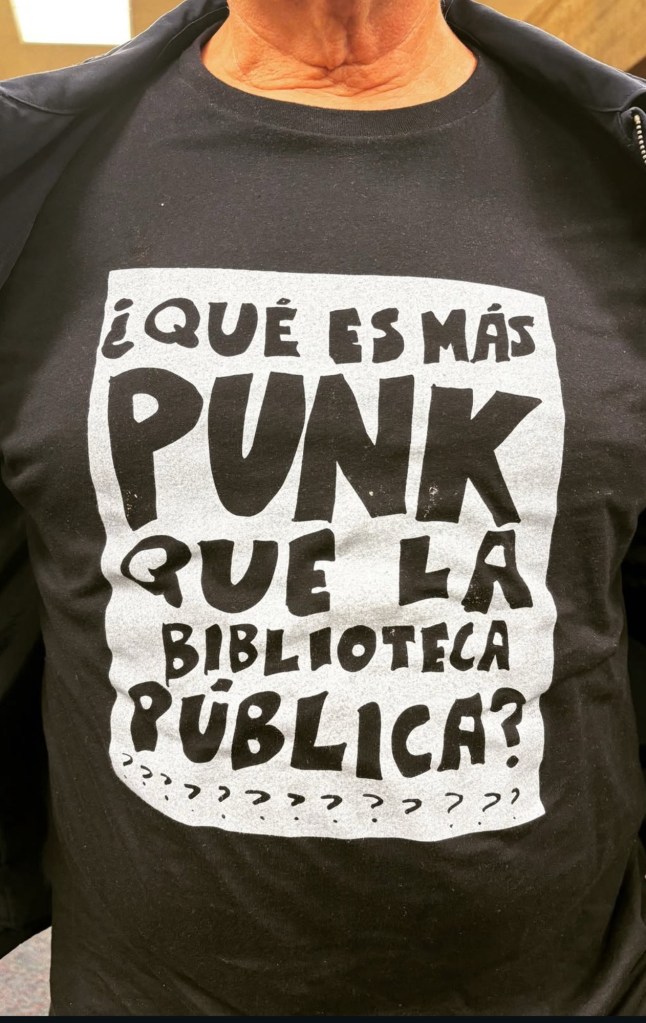
Source: Eagle Rock branch of the Los Angeles Public Library.
The public library is a safe place for everyone to learn and grow. That’s the message public libraries nationwide are sharing with humor and creativity across social media.
People around the country are responding to that message with a lot of love. The comments to public library posts on Instagram and Tik Tok are overwhelmingly positive. Likes are in the thousands. The comments and likes are a visceral, digital reflection of how much Americans value their public libraries.
Public library social media plays on what we know and believe about public libraries.
As institutions, libraries are a physical expression of the public good. They exist for the purpose of expanding knowledge without limits for all people. Our nation’s public libraries are also among the few places in American society where everyone is welcome.
Here’s what your organization can learn from public library social media.
What do you want your community to know about your organization? Tell them in clear, plain language.
Express your purpose without hesitation. No ifs, or buts. This is what we do.
Show the value you provide.
Find different ways to keep telling your community who you are, what you do, and why you matter.
There’s no time to be coy when confronting the attempted overthrow of a democracy. The January 6 Committee is doing the necessary work of investigating and stating the facts of what happened that day. Big “D” and little “d” democratic organizations have to take on the role of making the hearings known and communicating the findings. Most media has essentially abdicated their responsibility on this front. So far, finding out about the hearings seems to be more about luck than the results of a coordinated strategy. Other than the Twitter accounts of the January 6th Committee and its members, few Democratic Members of Congress prominently list the committee hearing dates and times.
These hearings are probably the most important in American history. They are about getting a full and accurate account of the attempted overthrow of the democratically elected government of the United State of America. Widespread shared understanding of the same baseline factual information is essential. When more people watch the hearings misinformation is easier to combat. If the people who participated in the attempted coup aren’t named and held to account, what would stop them or their allies from trying again?
So where’s the push to watch the hearings? If we don’t collectively bear witness again to the betrayal of January 6, justice isn’t likely. Republicans began downplaying the attempted coup hours after it happened. Maybe there’s a grand multifaceted communications strategy that will reveal itself tomorrow. If it comes, the goal must be to make sure there are real consequences for the perpetrators and accomplices. We can then as a nation begin the long overdue work of rejecting fascistic authoritarianism in American government. A just society is possible for all of us.
Seeding Justice is the new name of the McKenzie River Gathering (MRG) Foundation. To announce the name change, Seeding Justice did something completely refreshing. They made a video. Yes, a video. You may wonder how refreshing a video about a foundation’s name change could be. Well, watch it.
Okay, you watched the video. Seeding Justice’s approach to telling their renaming story is creative and endearing. They turned the video call, which has become an obligatory and tedious element of American pandemic life, into something hopeful and engaging.
The video is effective because the conversations show viewers how deeply the new name connects with people who know the organization well. Seeding Justice is a powerful name. It tells you exactly what the organization does and hopes to do. The mission of Seeding Justice is “to inspire people to work together for justice and mobilize resources for Oregon communities as they build collective power to change the world.” Real people talking about how well the new name fits the organization is a lot more memorable and meaningful than a press release.
Lessons in nonprofit communications from World Central Kitchen
If you want your supporters to know why your work matters, tell them. That’s what World Central Kitchen (WCK) does. WCK isn’t the only organization dedicated to feeding people in times of crisis. They stand out because they do an incredible job of telling their story.
Yes, WCK was founded by chef José Andrés and most organizations don’t have anyone like him on their team. What they do have is the quality of their work and their unique story. A lot of organizations are great at what they do. Where they struggle is communicating why their work matters. That’s one of the many reasons a clear mission is essential. WCK’s mission and vision can be summed up in this statement by chef Andrés: “I hope you’ll dream with us as we envision a world where there is always a hot meal, an encouraging word, and a helping hand in hard times. Thank you for taking this journey with us.” Good, effective storytelling and overall organizational communications flow from mission clarity.
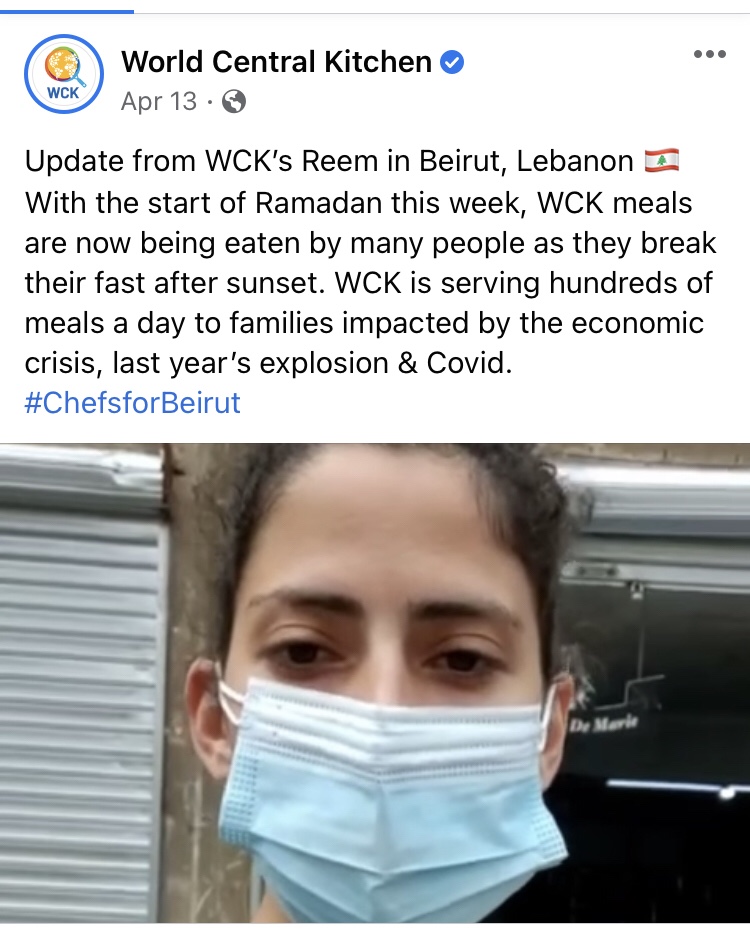
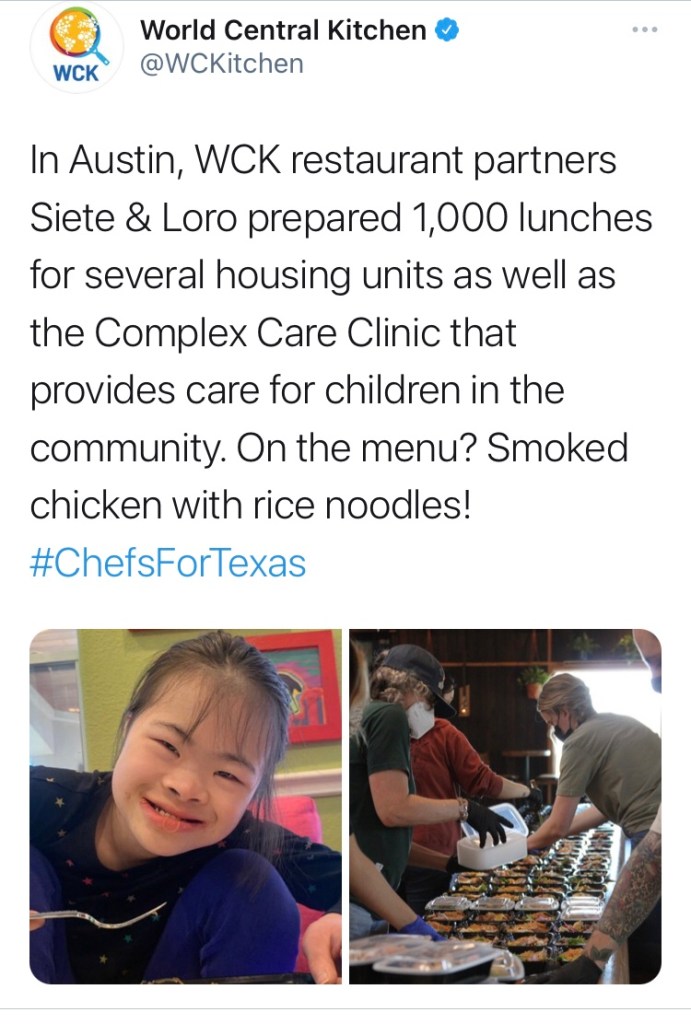
WCK’s social media channels feature compelling stories about real people. The emphasis is on community, connection, and hope. Whether the focus is on someone receiving food or serving food, every story demonstrates the importance of WCK’s work. There is no question about why the organization does what it does. Every post also carries an implied central message and call to action- people are hungry and in need of a hot meal right now, we’re feeding them, and you can help. This simple and effective message follows a basic message development structure:
State the problem– People are hungry and in need of a hot meal right now.
Describe your solution– We’re feeding them.
Make a call to action– You can help by (fill in the blank).
Check out these examples of this powerful strategy in action.
If you want your supporters to know why your work matters, start by telling them. Use these lessons inspired by WCK to get started-
Develop a clear central message that can be used implicitly or explicitly in all of your communications.
Focus your storytelling on the people at the center of your mission.
Tell people why you do what you do in the simplest terms.
Lead with your values.
Simplify your organization’s mission statement. If formally amending or updating the mission statement isn’t an option, use the distilled essence of the mission to guide your communications.









 DP Cogan Consulting