
Communications Notes: A resource for the professional yapper.

“Plain and accessible language is democracy on the page.” -Tom Albrighton, “How to Write Clearly.”

If you’re writing for a general audience, keep it simple. 

Over 50 percent of adults in the U.S. read at a sixth-grade reading level. If you want anyone in that group to understand your writing use plain, direct language. 

Plainlanguage.gov describes plain language as “communication your audience can understand the first time they read or hear it.”

We all win when ideas are easy to understand.
Communications Notes: A resource for the professional yapper.

Do you consider yourself a good communicator? Maybe even a great one? What about a “supercommunicator?”

Great communicators are active listeners. They ask thoughtful questions and match the emotions of their conversation partners. Supercommunicators do all of these things, too.

The big difference is they also consider the form and purpose of an interaction before it begins. 

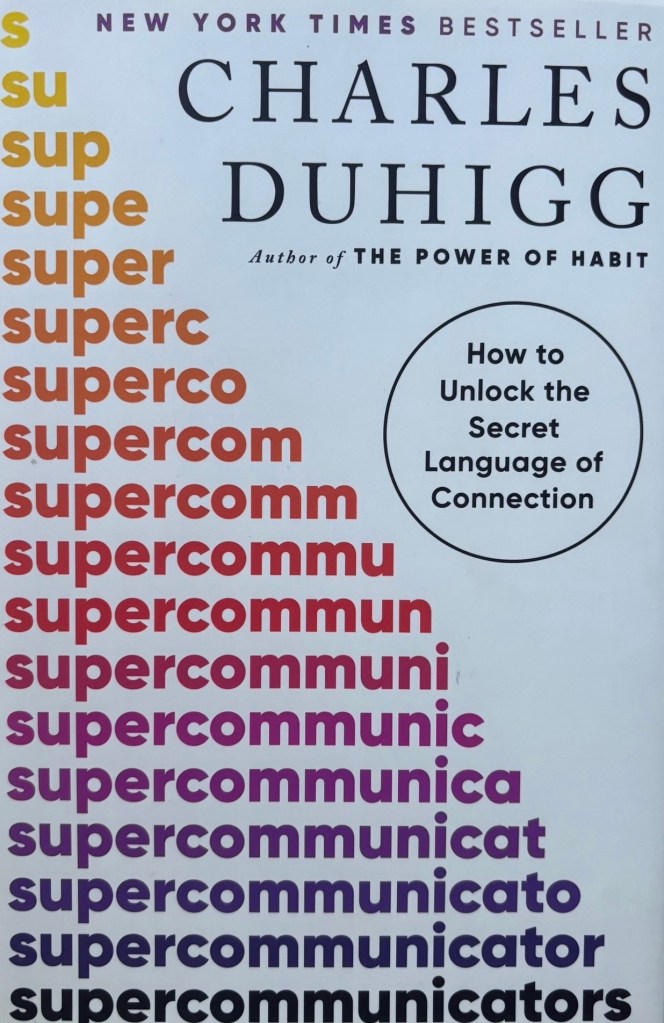
According to Charles Duhigg, author of “Supercommuncators,” there are three kinds of conversations: “practical (What’s this really about?), emotional (How do we feel?), and social (Who are we?).” The most effective communicators, the supercommunicators, recognize what kind of conversations they want to have and engage accordingly. They practice self-awareness about their own expectations, biases, and desired outcomes. This ability to read the room and yourself is key to real connection. 

Read “Supercommuncators” for more tips and insights.

Communications for a thriving democracy

If you’re working on communications to support a true democracy that works for all of us, check out the Pro-Democracy Narrative Playbook. This resource is invaluable for learning to tell stories for a better future.

My favorite piece of the playbook is the tip section for using everyday language in communications: https://prodemocracynarrativeplaybook.org/guide/considerations/

“Injustice anywhere is a threat to justice everywhere. We are caught in an inescapable network of mutuality, tied in a single garment of destiny. Whatever affects one directly, affects all indirectly.” 

-Dr. Martin Luther King, Jr.

Letter from Birmingham, Alabama jail, April 16, 1963.

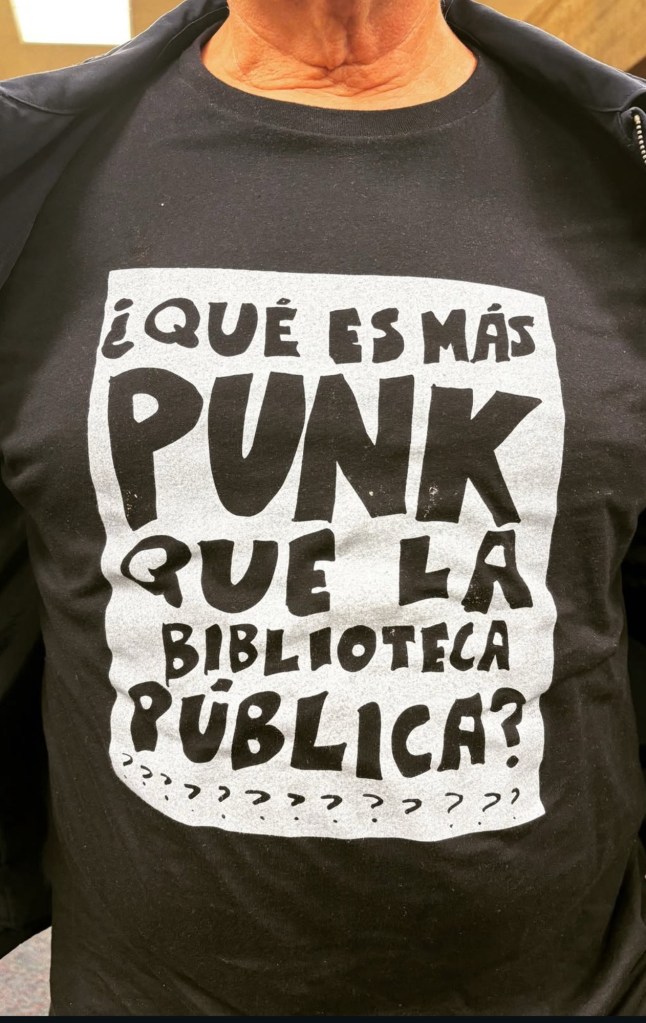
Good Communications: Public Library Social Media

Source: Eagle Rock branch of the Los Angeles Public Library.

The public library is a safe place for everyone to learn and grow. That’s the message public libraries nationwide are sharing with humor and creativity across social media. 

People around the country are responding to that message with a lot of love. The comments to public library posts on Instagram and Tik Tok are overwhelmingly positive. Likes are in the thousands. The comments and likes are a visceral, digital reflection of how much Americans value their public libraries. 

Public library social media plays on what we know and believe about public libraries. 

As institutions, libraries are a physical expression of the public good. They exist for the purpose of expanding knowledge without limits for all people. Our nation’s public libraries are also among the few places in American society where everyone is welcome. 

Here’s what your organization can learn from public library social media.

  • What do you want your community to know about your organization? Tell them in clear, plain language.
  • Express your purpose without hesitation. No ifs, or buts. This is what we do. 
  • Show the value you provide.
  • Find different ways to keep telling your community who you are, what you do, and why you matter.
Deschutes Public Library. Redmond, Oregon.

What role can philanthropy play to help keep democracy alive? 

Last notes from Women Funding Network’s Feminist Funded 2025. 

1. “You want impact?” Long-term, core, flexible funding. If we want to win, this is how it’s done. 

The Right does it and it works. The evidence is there.” -Happy Mwende Kinyili. Co-Executive Director, Mama Cash Fund. 

2. “A lot of transformational breakthroughs come from small organizations most people have never heard of. Fund them.” -Raquel Willis. Co-Founder, Gender Liberation Movement.

3. “Oppressive systems are coordinated. Our response has to be just as coordinated and more.” -Carmen Perez-Jordan. President and CEO, The Gathering for Justice. 

4. “Get off the sidelines. Move C3 and C4 dollars for the change you need. C4 funds help get a candidate elected; C3 dollars help them implement policies. When Progressives win, knives are out. They don’t have the resources and support to lead once they are elected.” -Amoretta Morris. President, Borealis Philanthropy. 

If you ever wonder who you are in this moment, consider these words from Smith College Associate Professor and MacArthur Fellow Loretta J. Ross: 

“I used to regret not being old enough to sit-in at lunch counters or march in the 60s for freedom, justice, and democratic values. This is our lunch counter moment. Are you standing up or sitting-in for justice or spitting on those who do?”

Professor Ross is one of the activists who coined the term “women of color” in 1977 and co-developed the theory of Reproductive Justice. She moderated a panel celebrating 40 years of Women’s Funding Network at Feminist Funded 2025.

“What I wish I had known as an activist or a donor.”

  1. Bold ideas come from civil society. 
  2. Data only matters when it moves. People need to know information exists and what it means. 
  3. Our language must invite people (outside of philanthropy, academia, policy) into the conversation. 

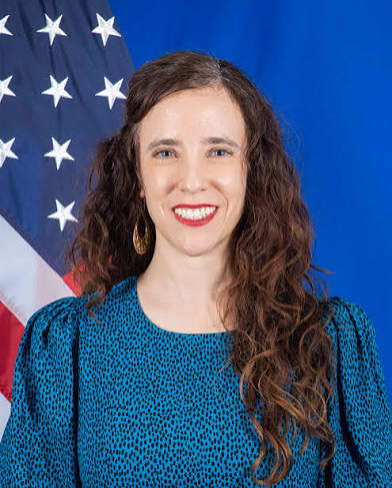
Jessica Stern is Co-Founder and Principal, The Alliance for Diplomacy and Justice. Stern spoke at Women’s Funding Network’s, Feminist Funded 2025, the largest gathering of global leaders in feminist philanthropy. 

Bearing Witness Can’t be Left to Chance: Sharing The Outcomes of The January 6th Committee Hearings

There’s no time to be coy when confronting the attempted overthrow of a democracy. The January 6 Committee is doing the necessary work of investigating and stating the facts of what happened that day. Big “D” and little “d” democratic organizations have to take on the role of making the hearings known and communicating the findings. Most media has essentially abdicated their responsibility on this front. So far, finding out about the hearings seems to be more about luck than the results of a coordinated strategy. Other than the Twitter accounts of the January 6th Committee and its members, few Democratic Members of Congress prominently list the committee hearing dates and times.

These hearings are probably the most important in American history. They are about getting a full and accurate account of the attempted overthrow of the democratically elected government of the United State of America. Widespread shared understanding of the same baseline factual information is essential. When more people watch the hearings misinformation is easier to combat. If the people who participated in the attempted coup aren’t named and held to account, what would stop them or their allies from trying again?

So where’s the push to watch the hearings? If we don’t collectively bear witness again to the betrayal of January 6, justice isn’t likely. Republicans began downplaying the attempted coup hours after it happened. Maybe there’s a grand multifaceted communications strategy that will reveal itself tomorrow. If it comes, the goal must be to make sure there are real consequences for the perpetrators and accomplices. We can then as a nation begin the long overdue work of rejecting fascistic authoritarianism in American government. A just society is possible for all of us.

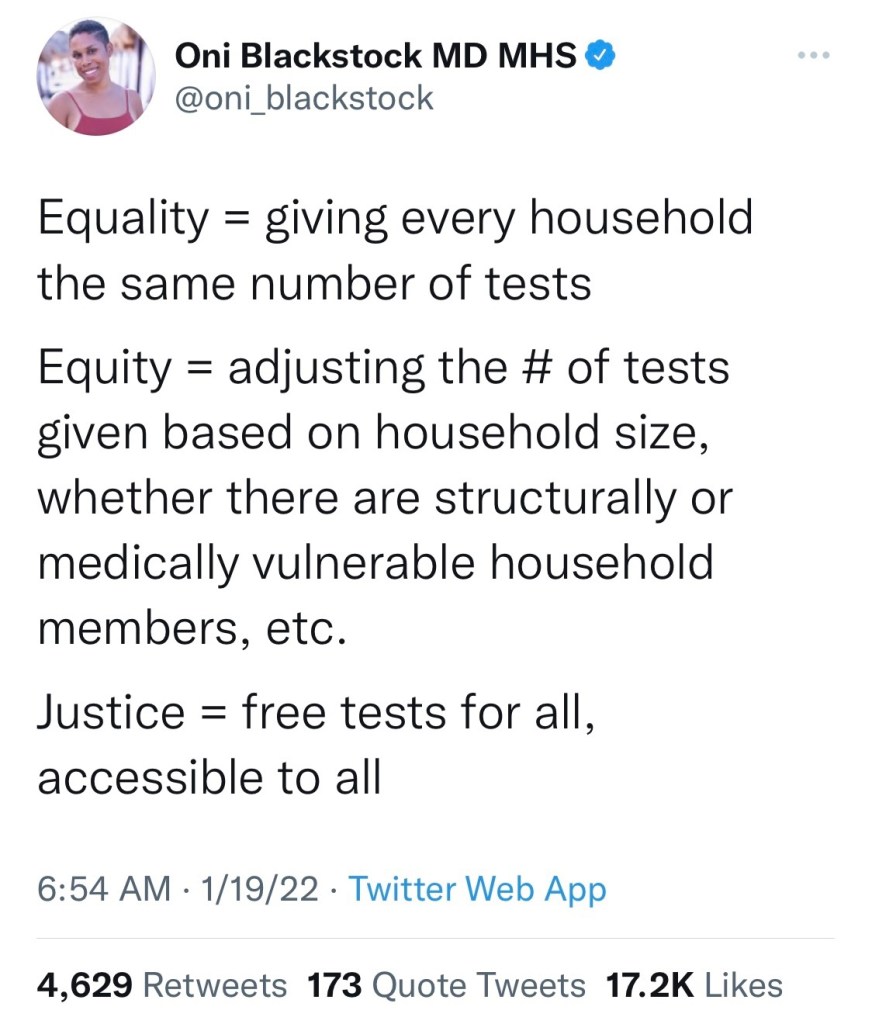
Equality, equity, and justice are sometimes used as interchangeable terms. They don’t mean the same thing. Here’s a practical way to tell the difference from Dr. Oni Blackstock, MD MHS.